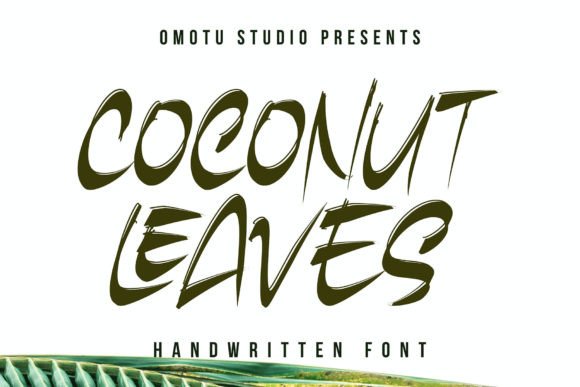
Coconut Leaves: A Handwritten Display Brush Font for Handmade Brands
I remember the moment I first opened the Coconut Leaves font file and typed out a single word on my label mockup. The brush strokes felt warm and intentional, like something painted by hand with a steady wrist and a bottle of ink. I was testing names for a small batch of soy candles I planned to sell at a local market, and I wanted the presentation to feel personal without looking digital. Coconut Leaves delivered exactly that. It is an all-caps handwritten display brush font that carries a natural, organic feel. Every letter looks like it was drawn with real pressure and texture, which made my candle labels look like they had been hand-lettered by an artist. That kind of visual personality is hard to find in standard fonts, and it immediately shifted how I thought about my product presentation.
Coconut Leaves belongs to the Display category, which means it is designed to make a statement. It is not a subtle body text font. It is bold, expressive, and built for moments when you want words to be the center of attention. The brush texture gives each character a slightly imperfect edge, and that imperfection is what makes it feel authentic. When I used it for product tags on my tote bags, the lettering looked like it had been painted directly onto the fabric. That handmade quality is something buyers respond to, especially in a market where so many products feel mass-produced. Coconut Leaves gives small shop owners a way to stand out without needing to hire a lettering artist.
Coconut Leaves for Handmade Product Labels and Packaging
When I design labels for my handmade products, I look for a font that communicates care. Coconut Leaves does that instantly. I used it for small adhesive labels on my lavender linen spray bottles, and the all-caps lettering gave the packaging a clean, confident look. The brush strokes added texture that made the labels feel like part of a boutique line rather than something printed at home. For product packaging, especially on items like candles, soaps, and balms, the font needs to be readable at a small size while still carrying visual weight. Coconut Leaves holds up well because the letterforms are clear and the brush contrast is not too extreme. I tested it on a 2-inch round label, and the name of the scent was fully legible while still looking artistic.
I also used Coconut Leaves for hang tags on my handmade towels and cloth napkins. The font felt natural against kraft paper and twine. If you sell physical products that rely on packaging to tell a story, this font can become a consistent visual anchor across your entire product line. Because it is all caps, it forces you to be selective with your wording, which is actually good for packaging design. Short phrases like "HANDMADE SOAP" or "PURE LINEN" become powerful statements. The font does the work of elevating simple words into something that feels curated. For product makers who sell on platforms like Etsy or at craft fairs, cohesive packaging builds trust, and Coconut Leaves can be the thread that ties everything together.
Using Coconut Leaves for Wedding Invitations and Stationery
Wedding invitations are one of the most personal printed items a couple will ever send, and the typography sets the entire tone. Coconut Leaves brings a romantic, handcrafted feel that works beautifully for invitation suites. I designed a welcome sign for a friend's barn wedding using this font, and the all-caps brush lettering paired perfectly with the rustic floral theme. The font reads as elegant but not stiff, which is a hard balance to strike. For invitation designers, Coconut Leaves works best for the couple's names, the main event title, or key phrases like "YOU ARE INVITED." Because it is a display font, it should be the hero of the design, not the supporting text.
I also tested Coconut Leaves on place cards and menu cards for a small dinner party. The font gave each card a hand-lettered look without requiring hours of calligraphy practice. When you print with a good quality paper and a slightly textured cardstock, the brush details really pop. For printable creators who sell invitation templates on platforms like Creative Market or Etsy, Coconut Leaves is a strong option because it allows buyers to customize their own designs while still getting a premium look. The font pairs naturally with simple serif or sans serif fonts for body text. I used it alongside a clean sans serif for the event details, and the contrast made the invitation feel complete and professional.
Coconut Leaves for Apparel Design and T-Shirt Graphics
Apparel is one of the most exciting categories for display fonts because the text becomes part of the visual design. I used Coconut Leaves for a small run of T-shirts with short phrases like "SLOW MORNINGS" and "KIND HEART." The brush lettering translated well to screen printing, and the all-caps format kept the designs bold and easy to read from a distance. For T-shirt design, you want a font that has enough weight to hold its own on fabric without getting lost in the weave. Coconut Leaves delivers that because the stroke width is consistent enough to remain visible even after multiple washes.
I also experimented with Coconut Leaves on hoodies using heat transfer vinyl. The font cut cleanly on my cutting machine, and the brush details did not cause any weeding issues. For makers who use Cricut or Silhouette machines, this is an important consideration. Some brush fonts have thin hairlines that break during cutting, but Coconut Leaves has sturdy enough letterforms to handle vinyl projects. I would recommend testing a small sample before committing to a large production run, but my experience was positive. For apparel brands that want a handmade, artisan look without appearing overly feminine or overly masculine, this font sits in a comfortable middle ground. It works for minimalist designs, nature-inspired quotes, and simple word marks.
Designing Branding and Logotype with Coconut Leaves
Building a brand identity around a single display font can be risky, but Coconut Leaves has enough character to serve as a logotype font for small businesses. I designed a simple wordmark for a friend's pottery studio using this font, and the result looked like something you would see on a high-end ceramics label. The brush texture gave the brand a tactile quality that felt connected to the handmade nature of the product. For logotype design, Coconut Leaves works best when the name is short, ideally one or two words. Longer names can feel heavy in all caps, so it is important to consider letter spacing carefully.
I also used Coconut Leaves for social media graphics and shop banners. The font stands out on digital screens because the brush strokes create visual interest even at small sizes. For Instagram posts, I used it for quote cards and product announcements. The organic look of the letters made my feed feel more cohesive and less reliant on stock photography. For brand identity, consistency matters, and using the same display font across packaging, labels, and digital graphics creates a unified presence that customers recognize. Coconut Leaves can be that anchor font for a brand that wants to communicate warmth, craftsmanship, and authenticity.
Coconut Leaves for Posters, Flyers, and Book Covers
Poster design requires typography that grabs attention from across the room. Coconut Leaves delivers that impact because the brush lettering feels dynamic and alive. I designed a small poster for a local farmers market event, and the title "FRESH FROM THE FARM" in Coconut Leaves looked bold and inviting. For flyers, the font works well for headlines and subheadings, but it is not ideal for large blocks of body text. Display fonts are meant to lead the eye, not carry the full message. When I paired Coconut Leaves with a simple serif font for the event details, the hierarchy felt natural and easy to scan.
For book covers, especially in genres like self-help, poetry, or lifestyle, Coconut Leaves can bring a personal, handwritten feel that draws readers in. I tested it on a mockup cover for a journal about slow living, and the font immediately communicated the right mood. The all-caps format gave the title a grounded, confident presence. Cover designers should consider how the font will scale down for thumbnail images on online stores. Coconut Leaves holds its detail well at reduced sizes, but I recommend testing a small preview to ensure the brush textures remain visible. For editorial design, this font is a strong choice for chapter titles, pull quotes, and decorative headings.
Font Pairing Ideas for Coconut Leaves
Pairing Coconut Leaves with the right companion font can elevate a design from good to exceptional. Because Coconut Leaves is a bold display brush font with organic texture, it benefits from contrast. I have used it with a clean sans serif like Montserrat or Lato for body text in invitations and packaging. The structure of the sans serif balances the brush strokes and prevents the overall design from feeling too busy. For a more elegant pairing, a simple serif font like Playfair Display or Cormorant Garamond creates a classic contrast that works well for wedding stationery and formal branding.
I have also experimented with pairing Coconut Leaves with a softer handwritten font for a layered look. When one word needs to stand out more than others, using Coconut Leaves for the primary word and a lighter script for the secondary text creates a natural hierarchy. For product labels where space is limited, I often stick with just Coconut Leaves and a sans serif to keep the design clean. The key is to let Coconut Leaves be the star and use the companion font to support without competing. Testing different pairings on mockups before finalizing a design will save time and help you find the right balance for your specific project.
Commercial Licensing and File Formats for Coconut Leaves
Before using Coconut Leaves for any physical products, printables, or digital downloads, it is important to check the included styles, alternates, ligatures, and file formats. Some display fonts come with multiple weights or stylistic sets that expand your design options. I always verify whether the font supports multilingual characters if I plan to use it for a broader audience. For commercial projects, understanding the licensing terms is essential. If you plan to sell physical products like T-shirts, candles, or mugs with Coconut Leaves text, or if you offer digital templates and printables, confirm that the license covers commercial use, including merchandise and print-on-demand items.
I also recommend checking whether the font includes OpenType features like swashes or alternates that can add extra personality to your designs. Some brush fonts offer alternate letterforms that let you customize the look of repeated characters. When I design labels for multiple products in the same line, I use alternates to keep each label feeling unique while maintaining brand consistency. The file format should be compatible with your design software, whether that is Adobe Illustrator, Photoshop, Canva, or Procreate. Most premium display fonts include both OTF and TTF formats, which work across Mac and Windows systems. Taking a few minutes to review the font details before purchasing will ensure that Coconut Leaves fits your workflow and your creative needs.
For any handmade seller or printable creator looking for a display font that communicates warmth and artistry, Coconut Leaves is a versatile and reliable choice. It brings a hand-painted feel to labels, packaging, apparel, stationery, and branding without requiring professional lettering skills. When you open that font file and type out your product name for the first time, you will see exactly what I mean. The brush strokes tell a story before you even add color or imagery. That is the kind of tool every maker deserves in their design kit.